• Hydrogel technology for stronger 3D printed metals
• Sensor Tip: Selecting position sensor stroke length
• Application: Shipping vessel motion controls
• and more. |
|---|
To view newsletter in your browser click here.
|
|---|
|
20X stronger metals through hydrogel vat polymerization.
|
|---|
| | | |
| | | |
| | | |
New Hydrogel Technology for Stronger, Less Shrinkage Metals
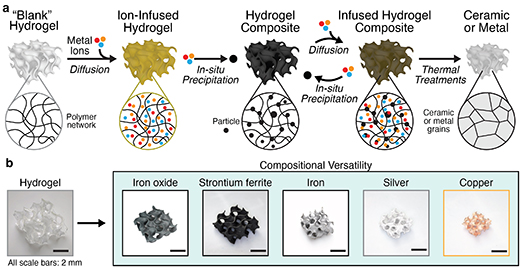
A new method of vat polymerization with 3D printing hydrogel “scaffolding,” then infused with metal salts creates metals that end up 20 times stronger and with up to 80% less shrinkage than other methods. It can also create ceramics.
|
|---|
“Instead of curing a resin that already contains metal compounds, the researchers begin by 3D printing a framework made from a simple, water-based gel called a hydrogel. This blank structure is then soaked in metal salts, which are chemically transformed into tiny metal-containing nanoparticles that spread throughout the gel. The process can be repeated several times to increase the concentration of metal within the material.”1 |
|---|
| | | |
 |
Selecting the Right Position Sensor Stroke Length
When an engineer specifies a position sensor for their application, there are a few universal aspects that need to be considered to maximize accuracy and avoid pitfalls. Mechanical stroke length, electrical stroke and electrically defined stroke are readily defined and vital to avoid overrun and sensor damage issues while designing in accuracy.
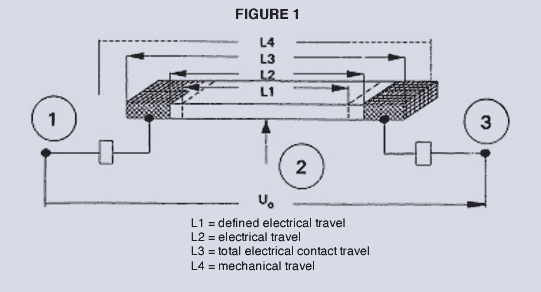
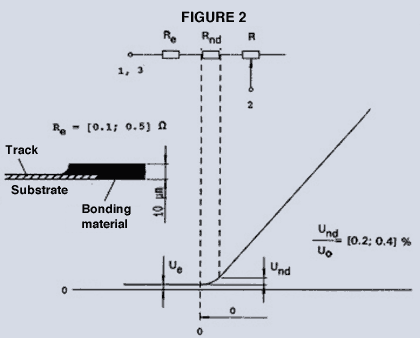
First, it helps to define the terms we are using. Referring to Figure 1, that represents a position sensor track, L1 indicates the defined electrical travel. L2 indicates the continued travel to where the track and bonding material begin to overlap, which becomes a nonlinear connection region as detailed in Figure 2. This is included in electrical stroke length but not defined electrical stroke. L3 indicates the total electrical contact travel of the potentiometer. L4 indicates the mechanical travel.
|
|---|
Requirement 1: total electrical stroke length (L2) should be a minimum of 5%, and preferably 10%, longer than the maximum stroke length your application requires. This ensures overrun errors and damage to the sensor are avoided.
Requirement 2: The closer the defined electrical stroke length can match the application’s actual required mechanical stroke length, the larger the change in signal will be over the range of motion. This will give you the maximum signal to noise ratio. If you try and match a small mechanical stroke length to a large electrical stroke, the output voltage change of the signal (or current change) would likely be very small and result in large resolution steps when run through a 10- or 12-bit A/D converter. In closed loop applications, this can cause dither of an actuator, imprecise positioning and overruns of the targeted position.
Linear position sensors are available in dozens of stroke lengths in small enough increments for virtually any application. For example, Novotechnik’s TLH has 20 different stroke lengths available– for short strokes in 25 or 50 mm steps between models and above 1,000 mm in 250 mm steps. Things are even easier with noncontact linear position sensors: many of the short and long stroke sensors come in different mechanical stroke lengths that can be individually programmed to - shorter than specified - strokes by the factory or – individually – by the customer, without special hardware or software. |
|---|
| | | |
Angle Sensors for Marine Applications Including Cargo Ships
| | | |
| | | |
|
|
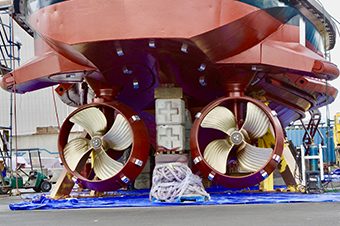
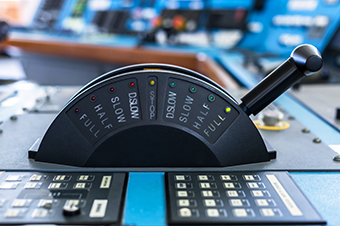
Rotary sensors for cargo shipping and other marine vessels have to withstand extreme conditions. It is crucial that high and low temperatures, temperature changes, salt and other corrosive substances, and permanent immersion in water have no impact on the rotary encoders used in shipping and rudder control. If one of these sensors fails, this will restrict the ability to steer the ship and may put cargo or passengers at risk.
Learn more. |
|---|
| | | |
| | | |
| |
| Please email suggestions for technical subjects you would like to suggest for this newsletter to this link: Newsletter Editor |
|---|
| | | | |
| |
|