• New Tech for Fastest EV Explained
• Sensor Tip: Touchless vs. Shaft Technology
• Application: Racecar Transmission
• and more. |
|---|
To view newsletter in your browser click here.
|
|---|
|
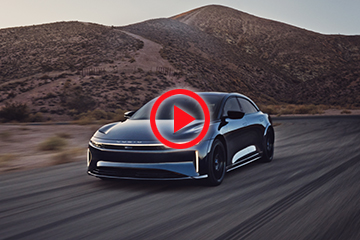
New in-house technology revealed in Air Sapphire tech video.
|
|---|
| | | |
| | | |
| | | |
New Technology Enables Fastest EV
The Lucid Air Sapphire is a new electric vehicle loaded with new technology. The technology incorporated into this car includes the rotor components in the motor, dynamic torque vectoring for better handling, inverter, cooling systems and more. These advances in technology translate into making the Sapphire one of the fastest and best handling cars on the market.
Here’s the prominent Sapphire specs. Maximum power of 1,234 hp, top speed of 205 mph, 0 to 60 mph on 1.89 seconds and travel range of 427 mi. Unfortunately all this cutting edge technology will set buyers back from $249,000.
Eric Bach, Lucid Motors’ Sr. VP of Product and Chief Engineer does an incredible job of demonstrating how the core technology incorporated in tho the Sapphire works in the linked video. It isn’t brief but it reveals some groundbreaking technology. It is well worth watching. Mr. Bach was previously Director of Engineering at Tesla, Inc. Their web page holds several other technical videos on other tech aspects of the car.
Some of the tech covered in the video is their inverter, AC motor designs and the use of silicon carbide switching devices to provide smooth and efficient torque at the level specified above. |
|---|
| | | |
 |
Touchless vs. Shaft Technology for Angle Sensors
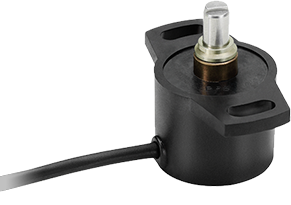
There are applications that are better suited to using a shafted rotary position sensor and others where a touchless (free-floating magnetic) one is a better choice. This tip presents several application situations and which type of sensor is preferred for that application as a guide to help with selection in general.
Applications that benefit from use of a shaft-type sensor |
|---|
• Applications in which a dancer arm is being used to measure tension of a wire or foil or fabric in a production machine and there is no other shaft available.
• Applications where the sensor needs to be part of a gear box or geared actuator and has a gear on its shaft.
• When replacing a contacting potentiometer type or RVDT-type sensor that had a shaft of same size.
• When the measurement site is very far from where the sensor can be mounted due to design considerations such as extreme heat. |
|---|
|
| | | |
Applications that benefit from a touchless sensor
• Applications where an angle measurement is made through the enclosure or machine wall.
• Applications seeking an IP69K sealed sensor
• When no sensor wear is desired
• Applications that have ultra-high vibration of the rotating shaft
• When a small radial misalignment of the applications rotating shaft may occur |
|---|
Touchless sensor benefits
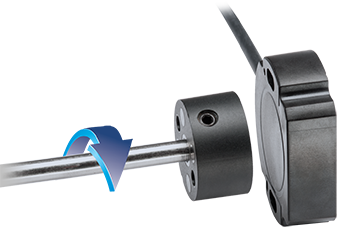
• Completely enclosed magnet and sensor for superior sealing properties
• No wear because no contact
• Radial and axial misalignment do not necessarily have to be compensated with expensive couplings
• Vibration from drive shaft / magnet marker does not get transferred to sensor providing maximum robustness
• Flexible mounting of sensor on front or on back of a mounting plate
• Can measure through non-magnetic walls <1/4”. |
|---|
|
| | | |
| | | |
Racecar Transmission Gear-Changer
| | | |
| | | |
|
|
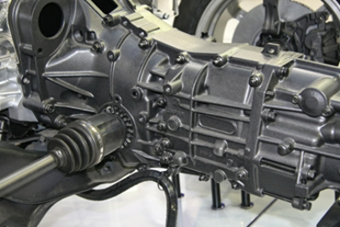
Racecar transmissions have to respond instantly to driver input, as well as change gears precisely and smoothly. The components in the transmission undergo a lot of heat and stress during a race. Reliably sensing gear change control rod position under these conditions is critical.
Novotechnik’s RFC 4800 was selected by a premiere racing team for their transmission. This touchless angle sensor uses a magnetic marker attached to the application’s moving part and sensor base. It has a maximum range of 360°, repeatability of ≤ 0.1° and an operating temperature range of -58°F to +221°F. Shock and vibration ratings are 50g and 20 g respectively. |
|---|
| | | |
| | | |
| |
| Please email suggestions for technical subjects you would like to suggest for this newsletter to this link: Newsletter Editor |
|---|
| | | | |
| |
|